

 New energy vehicles are emerging strongly in IndonesiaSep 17, 2026
Indonesia's new energy vehicle market has undergone exponential growth over the past five years. From fewer than 500 battery electric vehicles sold in all of 2021 to 43,188 units in 2024, the market has exhibited an accelerating trajectory in 2025, with BEV sales reaching 35,749 units in the first half of the year alone, representing a year-on-year increase of 267%. More notably, wholesale volumes in July 2025 reached 5,433 units in a single month, with cumulative sales over the first seven months matching the full-year total of 2024. By the end of 2025, Indonesia's electric vehicle parc had approached 120,000 units, doubling within a single year. In terms of penetration rate, however, electric vehicles remain a niche segment, with BEVs accounting for merely 5% of total vehicle sales in 2024, rising to approximately 12% when hybrid models are included. Nevertheless, the trend has been firmly established: EV market penetration surged to 15.2% in the second quarter of 2025, signaling that a structural inflection point may have arrived.
Charging infrastructure constitutes the core bottleneck constraining further market expansion. Although Indonesia's state electricity company PLN is accelerating deployment, the national total of charging stations stood at approximately 3,385 as of 2025, leaving an enormous gap relative to the target of 63,000 units planned for 2030. Moreover, the vast majority are concentrated in Java and Bali, with outer islands remaining virtually blank. For Chinese enterprises expanding overseas, this represents both a deficiency and an opportunity.
The brand competitive landscape presents a highly dramatic picture: Chinese brands are rewriting Indonesia's five-decade-long Japanese-dominated automotive market order at an unprecedented pace. In 2024, BYD became the BEV sales champion with 15,429 units, capturing approximately 36% market share. By 2025, this figure climbed further to over 50%, with multiple BYD models persistently dominating the rankings; its Atto 1 became the nation's best-selling model in November 2025 with monthly sales of 8,333 units, surpassing even gasoline-powered vehicles from Toyota and Nissan. In July 2025, the top ten best-selling electric vehicles all originated from Chinese brands, including BYD, Chery, Wuling, GAC Aion, and Geely. Japanese automakers have nearly lost their presence in the pure electric segment and are attempting to counterattack with hybrid models, such as Honda reducing the price of the CR-V hybrid and Suzuki launching the eVitara; however, the advantages of Chinese enterprises in electric drive technology and supply chain integration remain difficult to challenge in the near term.
More Detail Our EV Chargers Now Powering Turkey’s MarketJul 27, 2026
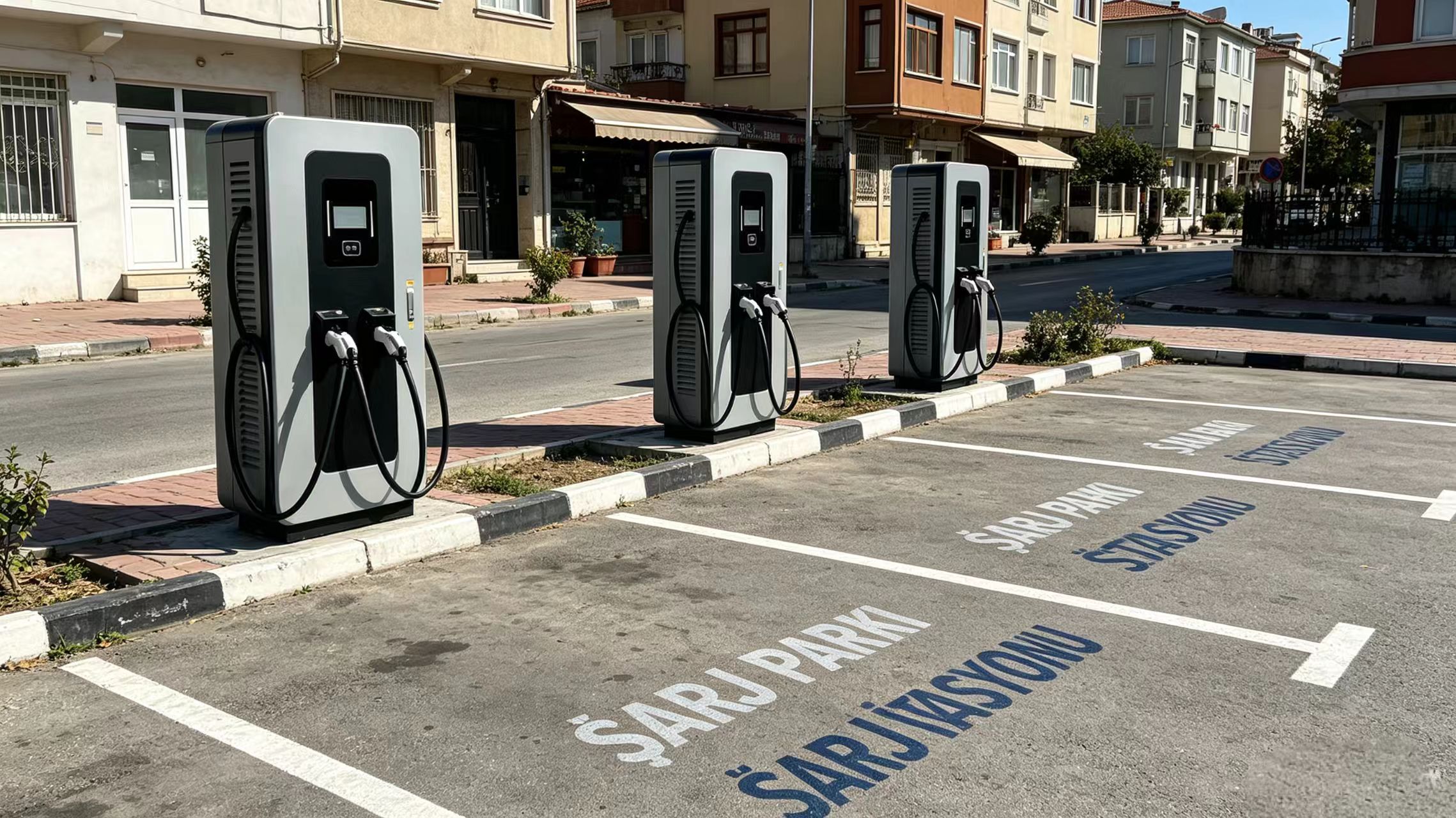
We are proud to announce that our EV charging solutions have officially entered the Turkish market – a dynamic arena where global giants compete side by side. Turkey’s rapidly growing electric vehicle ecosystem has attracted leading international brands, making it one of the most demanding and competitive landscapes in the region. Yet, within just months of our launch, our charging stations have been installed at key commercial sites, highway corridors, and urban hubs across Istanbul, Ankara, and Izmir.
What sets us apart is not aggressive pricing, but proven reliability. Turkish partners and end-users have rigorously tested our equipment against extreme summer heat, coastal humidity, and high-utilisation cycles. Our chargers consistently delivered stable output, smart connectivity, and minimal downtime – outperforming expectations in real-world conditions. This performance has earned us trust from local fleet operators, hotel chains, and shopping mall developers, who value long-term uptime over short-term savings.
Every unit carries CE and TÜV certifications, and our remote diagnostic system ensures 24/7 support. We listen to local feedback and adapt swiftly – from multi-language interfaces to customised power profiles. Today, we are not just another brand; we are a reliable partner. As Turkey accelerates toward its 2030 EV targets, we are honoured to contribute with quality that speaks for itself. This is only the beginning.
More Detail Some trends regarding the development of new energy vehicles worldwideJun 21, 2026
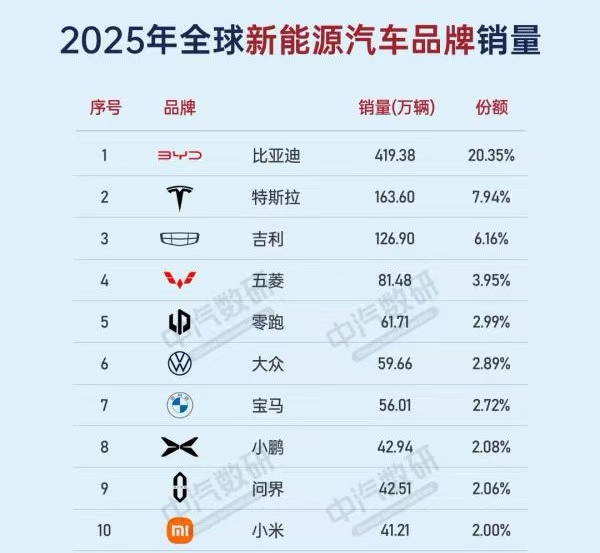
This list of the top ten global new energy vehicle brands by sales volume in 2025 clearly shows that the global electric vehicle landscape has been completely reshaped. Chinese domestic brands have fully taken the dominant position in the market, while traditional overseas car manufacturers have lagged behind in their transformation process. The industry's technology, market, and competitive logic have undergone fundamental changes. By analyzing the data, four core development trends can be identified.
The core data of the ranking is highly persuasive: Among the top ten positions, Chinese brands hold 7 spots, namely BYD, Geely, Wuling, Li Auto, Xiao Peng, Yawei, and Xiaomi. Tesla, Volkswagen, and BMW are the only overseas brands that made it to the list. BYD leads the pack with 4.1938 million units sold and a global share of 20.35%, leaving no other brand behind. Geely and Wuling follow closely with 1.2690 million and 0.8148 million units respectively. Li Auto, Xiao Peng, Yawei, and Xiaomi have steadily climbed to the top ten, covering the entire price range from affordable commuting to high-end intelligence. In contrast, the European, American, Japanese, and Korean automakers only maintain the second position for Tesla. The sales of Volkswagen and BMW are less than 600,000 units, leaving a huge gap compared to the leading Chinese brands. Traditional giants such as Toyota, Mercedes-Benz, and Hyundai have failed to make it into the top ten, and their efforts in electric vehicle transformation have been weak.
The first major trend: The core production capacity and supply chain of the global new energy industry have been completely shifted to China, and local brands have achieved a dominant advantage across all sectors. China has the most complete battery power, vehicle manufacturing, and intelligent cabin industrial chains in the world, with product matrices covering all consumption levels. Wuling has deeply focused on the micro transportation market and used high-performance and cost-effective models to open up the global lower-income market; BYD relies on the DM-i hybrid and pure electric dual-track approach, taking into account both household long-distance and urban commuting needs; Xiongpeng, Yebai, and Xiaomi focus on the high-end intelligent sector, relying on self-developed intelligent driving and in-vehicle systems to create differentiated competitiveness. The complete industrial chain brings scale cost advantages, and domestic automakers are accelerating overseas factory construction, exporting to Europe, Southeast Asia, and Latin America, continuously expanding global market share. Overseas automakers cannot replicate this complete industrial system in the short term.
Secondly, the exclusive brand benefits of purely foreign-owned new energy companies have waned, and traditional fuel giants have encountered bottlenecks in their electric transformation. Tesla once monopolized the leading position in global new energy, but now its market share is only 7.94%, relying solely on the Model 3 and Model Y models to drive growth. The shortcomings of a single product line and the slowdown in intelligent iteration have continued to be exposed. German luxury car manufacturers like Volkswagen and BMW still rely on the modification of fuel vehicle platforms for their electric products, lagging behind Chinese brands in software and autonomous driving capabilities, and lacking core appeal. Their market growth is also weak. Japanese and Korean automakers have a slower transformation pace, favoring hybrid power over pure electric, which is out of step with the global mainstream trend and directly fails to make it into the top ten list. The advantages of traditional automakers in the fuel era are rapidly disappearing.
Thirdly, the technological routes have become diversified, with hybrid, range-extended, and pure electric models all available to cater to different markets worldwide. BYD, Geely, and Wanxiang have addressed the issue of insufficient charging infrastructure in overseas markets by relying on plug-in hybrids and range-extended vehicles, and have received a large number of orders in Europe, Southeast Asia, and Central Asia. Wuling, Xiaopeng, and Zhongle focus on pure electric models, which are suitable for short-distance urban travel needs. The simultaneous promotion of these two technological routes is the key for Chinese brands to cover diverse global demands. However, most overseas automakers stick to pure electric routes and lack hybrid products suitable for developing countries, resulting in limited market coverage.
Fourth, intelligence has become the core of the competition in the second half, and new forces have quickly made rapid leaps. Among the rankings, Xiaomi, as a new entrant brand, ranked tenth in the first year with 412,100 units sold; Xiongpei and Yebai have formed core selling points through high-level intelligent driving and HarmonyOS cabin systems. Currently, when consumers choose new energy vehicles, they no longer only focus on range and batteries; intelligent interaction, automatic assistance driving, and vehicle system ecosystem have become the core decision-making factors. Chinese automakers generally self-develop intelligent software and hardware, and their iteration speed far exceeds that of overseas automakers. The gap in intelligence will continue to widen the market share gap.
Overall, the global automotive industry's trend towards electrification is irreversible, and the market dominance has shifted from Europe, America, Japan and South Korea to China. In the future, industry competition will no longer be limited to hardware manufacturing; overseas local operations, low-carbon battery technology, and full-stack self-developed intelligent systems will become new competitive barriers. If traditional overseas automakers fail to accelerate their electrification and intelligence transformation, their market share will continue to be eroded by Chinese domestic brands; while domestic automakers aiming to consolidate their advantages need to continue to deepen their overseas operations, improve the global supply chain, continuously maintain the speed of technological iteration, and firmly grasp the leading position in the global development of the new energy industry.
More Detail Some Thoughts on Trump's Visit to ChinaMay 13, 2026
If Trump's visit to China in 2017 was a handshake at a high point in Sino-US relations, then the context is entirely different if he were to set foot on Chinese soil again today. The world has weathered the storms of trade frictions, the pandemic, and geopolitics, and Sino-US relations have also experienced five years of ups and downs. At this juncture, his arrival itself sends a signal: even amidst intense competition, the door to dialogue has never been closed.
The most striking aspect of this hypothetical visit is not the protocol or the number of agreements signed, but the efforts of the two major powers to find a way to coexist amidst competition. In today's Sino-US relationship, "decoupling" has proven unrealistic; the deep intertwining of supply chains, climate change, and artificial intelligence governance all force both sides to sit down and talk. Trump's unique "transactional diplomacy" style might be able to break through seemingly rigid issues and create a gap for pragmatic cooperation.
Of course, we are also aware that a single visit cannot resolve all structural contradictions. But as long as there is face-to-face communication and listening to each other's core concerns, conflict can be transformed into a controllable game. On such a day, the only conclusion is: cooperation benefits both sides, while confrontation harms both—this remains an irrefutable truth. It is hoped that this trip today will lay a solid foundation for China-US relations over the next four years and beyond.
More Detail Sales of Chinese electric vehicles have soared in EuropeApr 22, 2026
In March 2026, the registrations of battery electric vehicles (BEVs) in 14 major EU and European Free Trade Association (EFTA) countries exceeded 224,000 units, representing a year-on-year increase of 51%, and accounted for 22% of total new vehicle sales in that month; it is estimated that this proportion stood at 21.2% across the entire EU. In the first quarter of 2026, cumulative BEV registrations in EU countries exceeded 500,000 units, marking a 33.5% year-on-year increase compared with the same period in 2025. Year-to-date BEV registrations in the five major economies of Germany, France, Spain, Italy and Poland all recorded a year-on-year growth of over 40%. Among them, Italy's BEV market share rose from approximately 5% at the end of 2025 to 8.6% in March 2026, with registrations increasing by 65% year-on-year; driven by new incentive policies, one out of every four new vehicles sold in Germany in March was a BEV, driving a 42% year-on-year increase in year-to-date sales; in France, BEVs accounted for 28% of new vehicle sales in March, and benefited from the social leasing program, year-to-date sales have increased by nearly 50%. Nordic countries continue to maintain their leading position: BEVs accounted for 76.6% of new vehicle sales in Denmark in March, nearly 50% in Finland, and 98.4% in Norway.
Relevant institutions point out that the popularization of electric vehicles has significantly reduced Europe's dependence on imported oil, and based on current registration volume estimates, it can reduce oil demand by approximately 2 million barrels per year. This trend had already emerged before the Middle East situation fully affected market data, and purchasing behaviors of consumers and fleet operators are accelerating the adoption of electric vehicles.
More Detail


Please Give Us A Message